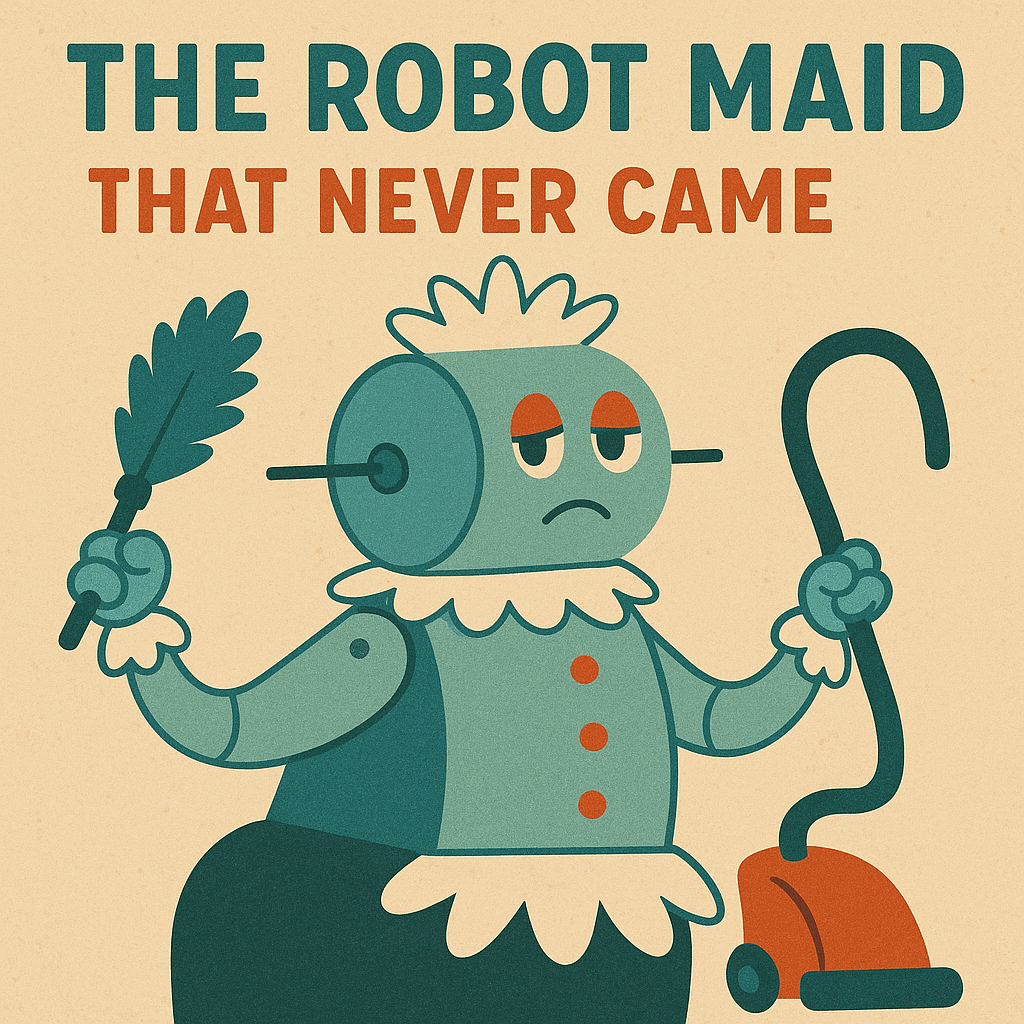
The future once promised us a domestic android: humanoid, sassy, and armed with enough personality to roll her mechanical eyes at our questionable life choices. Rosie the Robot from The Jetsons became the archetype, dusting with flair, serving dinner with snark, and occasionally quitting in a huff when George got too demanding.
For decades, this was the dream: not just a machine to clean, but a robotic personality woven into family life. A mechanical Mary Poppins with Wi-Fi and a warranty.
Step into a modern home and you’ll see what happened. Rosie didn’t disappear; she dissolved into the architecture. A Roomba patrols the floors, your dishwasher schedules itself for 2 a.m., the thermostat adjusts the heat before you realize you’re chilly. Smart speakers, doorbells, and lights hum along in quiet coordination like an invisible staff.
The humanoid dream hasn’t vanished entirely. Companies like Boston Dynamics and Honda keep rolling out dazzling prototypes, bipedal machines that run, flip, and carry boxes with uncanny precision. Their robots look closer to Rosie than your Roomba ever will, but they remain demonstrations of engineering bravado rather than domestic help. They’re expensive, too complex, and frankly too unnerving to fold laundry or scrub a toilet. They remind us that the fantasy of a humanoid maid lingers at the edges of possibility, even as the real future of housework chose invisibility over spectacle.
Maybe we asked the wrong question. The goal was never really a humanoid maid in an apron, it was freedom from drudgery. The answer wasn’t one robot with attitude, but dozens of devices quietly collaborating.
 Rant and File
Leave a comment