• Vibe-coding or no-coding?

    Vibe-coding or no-coding? We are entering the era of roll your own apps.

    This last week I found myself spending some quality time with Glaze (Raycast’s no-code AI app builder, https://www.glaze.app), and in just a few hours of back and forth, I pulled together a simple, clutter-free journaling app I’m now using as a daily brain dump.

    What it does:

    • Timestamped journal entries with auto-derived titles, tags, and full search history
    • Linkable tasks with due dates and native macOS reminders
    • A local AI assistant (LM Studio) with access to my active journal and task entries as context, prompt history that is saved, allowing me to reference it when needed
    • iCloud syncing of stored JSON data for backup and access on other Macs

    This started as an extensive Q&A with Claude in an attempt to build a simple web app. While I ended up with a usable result, it was clunky with too many clicks and too much manual management. Glaze took the same ideas and turned them into a full blown working application.

    We’re entering a phase where valuable software doesn’t require a developer, just patient individuals, solving hyper-specific problems for themselves. The gap between “I just need this one thing” and “it exists” is closing fast.
  • The Death of the Electric Dream: How We Traded Neon for Serenity

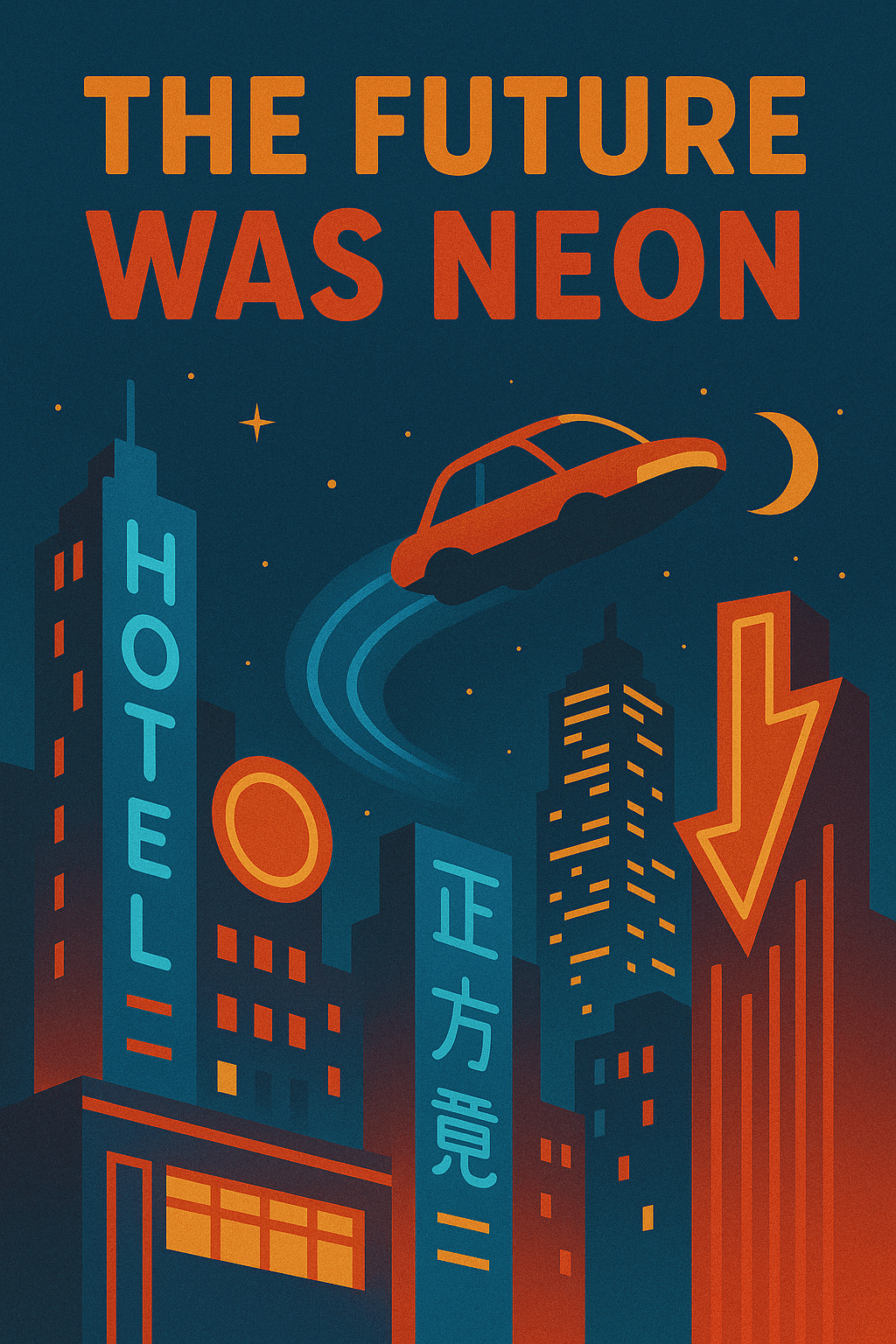
    Picture the future as imagined in 1982 in the movie Blade Runner. Endless rain, neon signs clicking and pulsing like electronic heartbeats, and cities overcome with noise. The future was supposed to be loud, visually relentless, never sleeping, never dimming.

    For a while, we chased it. Shibuya, Times Square, and Las Vegas still pulse with light, vast theaters of color and motion where night never truly falls. The billboards got bigger, the LEDs sharper, the animations smoother. Every surface became a screen competing for your gaze. Somewhere along the way, our appetite dimmed. What once felt thrilling started to feel relentless. The cities stayed loud; we got quiet. The neon dream survived as spectacle, not as aspiration.

    Technology got stronger as it got subtler. Phones, AI and smart homes became nearly invisible. The louder our tools grew in capability, the quieter they became in form.

    We learned that constant stimulation isn’t progress, it’s burnout. The neon future dazzled us, but the serene one sustains us.

    We didn’t reject the electric dream because we couldn’t build it. We built it and realized it gave us headaches. What we wanted instead was balance: technology that enhances life without overwhelming it.

    The future was neon. Wisdom and time have taught us to dim the lights.

    ,

  • The Robot Maid Who Never Came (But Kind of Did)

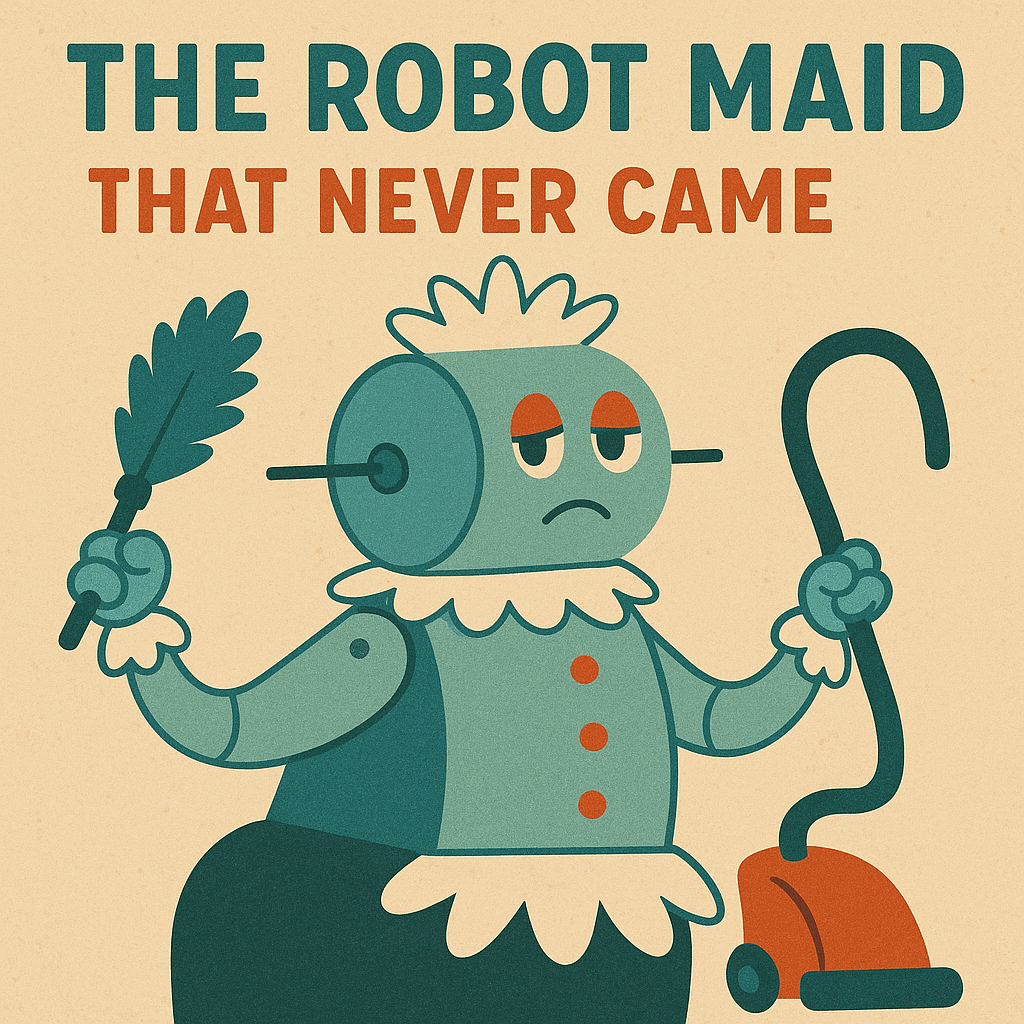
    The future once promised us a domestic android: humanoid, sassy, and armed with enough personality to roll her mechanical eyes at our questionable life choices. Rosie the Robot from The Jetsons became the archetype, dusting with flair, serving dinner with snark, and occasionally quitting in a huff when George got too demanding.

    For decades, this was the dream: not just a machine to clean, but a robotic personality woven into family life. A mechanical Mary Poppins with Wi-Fi and a warranty.

    Step into a modern home and you’ll see what happened. Rosie didn’t disappear; she dissolved into the architecture. A Roomba patrols the floors, your dishwasher schedules itself for 2 a.m., the thermostat adjusts the heat before you realize you’re chilly. Smart speakers, doorbells, and lights hum along in quiet coordination like an invisible staff.

    The humanoid dream hasn’t vanished entirely. Companies like Boston Dynamics and Honda keep rolling out dazzling prototypes, bipedal machines that run, flip, and carry boxes with uncanny precision. Their robots look closer to Rosie than your Roomba ever will, but they remain demonstrations of engineering bravado rather than domestic help. They’re expensive, too complex, and frankly too unnerving to fold laundry or scrub a toilet. They remind us that the fantasy of a humanoid maid lingers at the edges of possibility, even as the real future of housework chose invisibility over spectacle.

    Maybe we asked the wrong question. The goal was never really a humanoid maid in an apron, it was freedom from drudgery. The answer wasn’t one robot with attitude, but dozens of devices quietly collaborating.

    ,
  • Remote-controlled artificial cells could transform cancer treatment

    Outlet: The Times

    Date: September  2,  2025

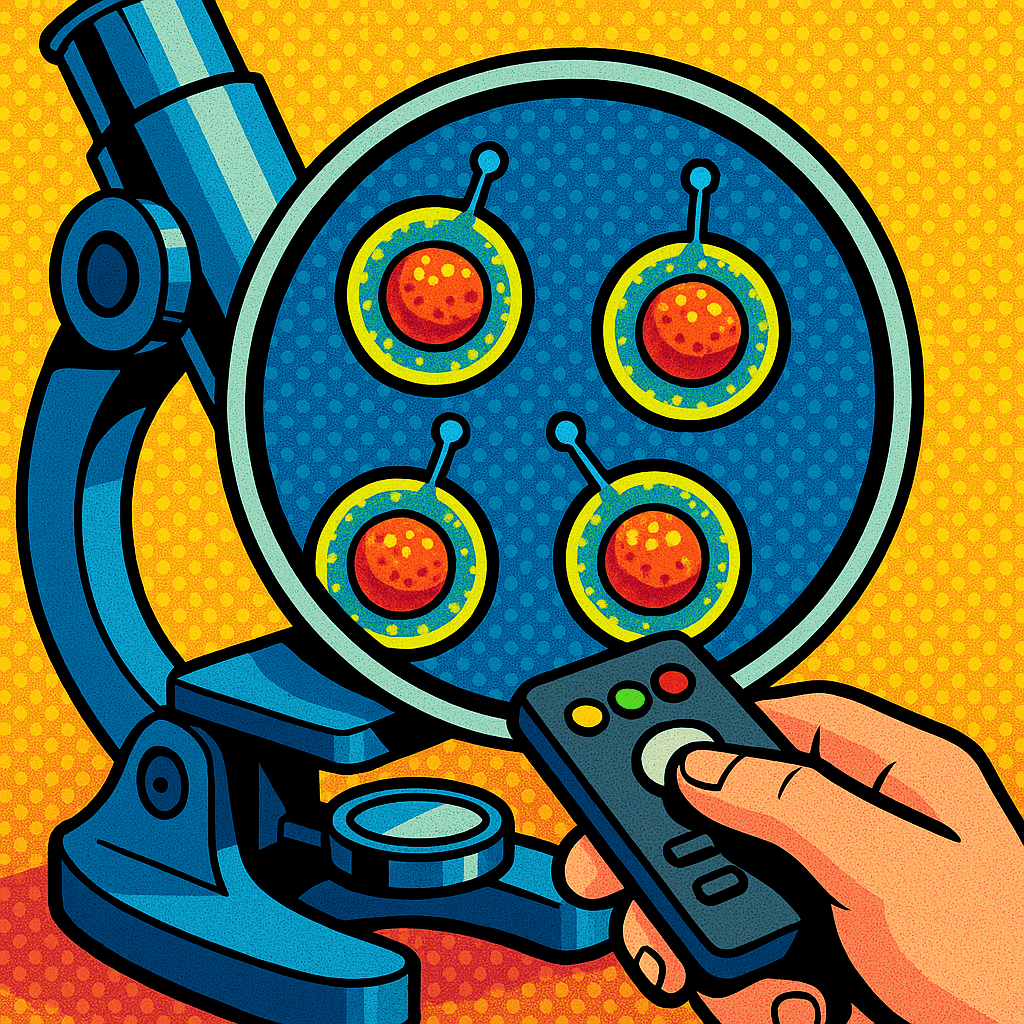
    Inside a lab where design smarts meet sci-fi imagination, a team from University College London and Oxford has engineered synthetic cells that work like microscopic drug factories, switched on remotely with magnetism. Picture courier-cells delivering medicine exactly where it’s needed: no scalpels, no blanket side effects, just clean precision treatment. This isn’t hype, it’s science quietly turning the extraordinary into the practical.

    Here’s the tech twist: forget flashy lasers, this is all about magnetic control. Lipid-shelled synthetic cells respond to alternating magnetic fields, releasing therapeutic proteins on demand. The potential is huge; personalized treatment, tightly controlled, with far fewer side effects. Animal trials come next, with clinical testing potentially on the horizon within a decade. This isn’t a dream of the 22nd century; it’s near-future medicine you can almost reach for. This is healthcare with a remote control.

    Source link: https://www.thetimes.com/uk/science/article/remote-controlled-synthetic-cells-cancer-treatment-cx3tgq5h3

    ,
  • The Meal That Never Was: Why We Rejected Dinner in a Pill

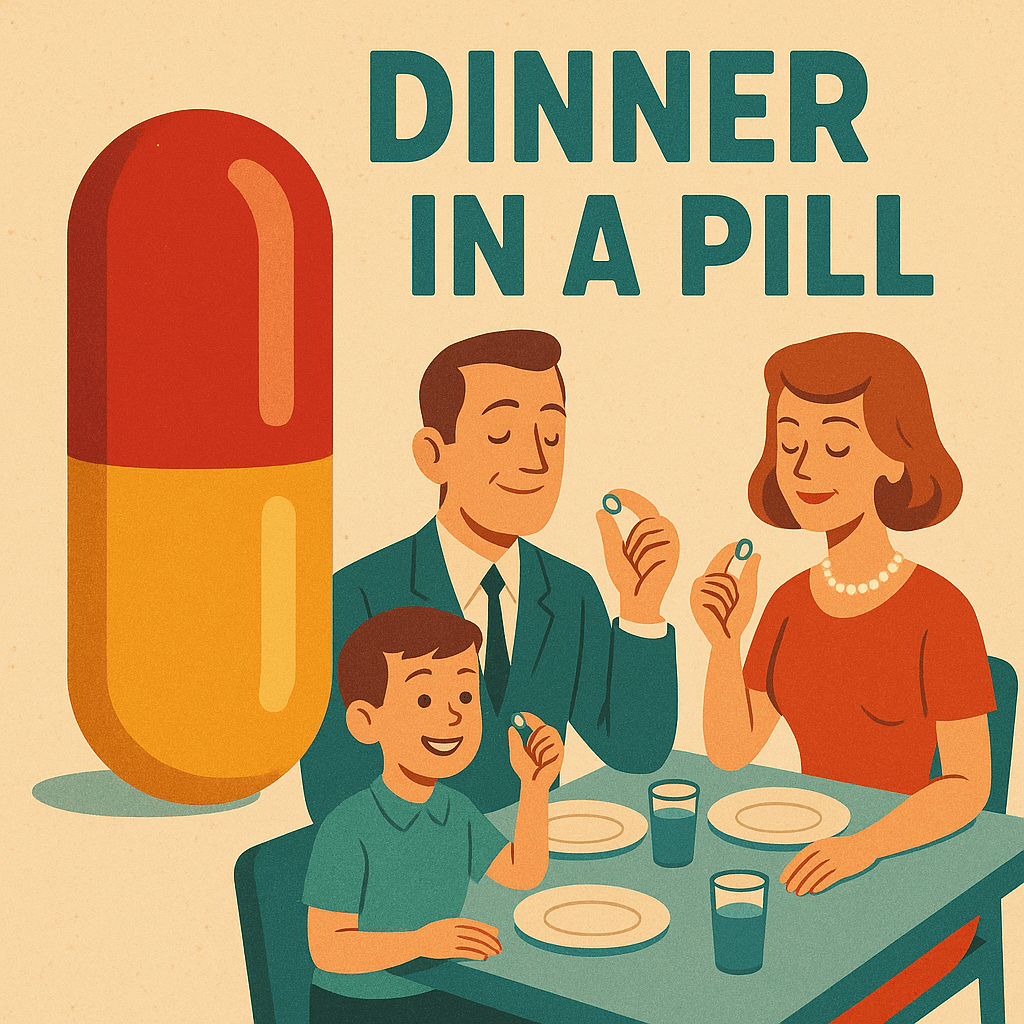
    For decades, scientists and magazine writers treated the “dinner pill” as an inevitability. The idea had been around since at least 1893, when suffragist Mary Elizabeth Lease predicted at the Chicago World’s Fair that kitchens would vanish, replaced by little phials containing concentrated wheat extract. By 1913, L. Frank Baum had given Oz readers “Square Meal Tablets,” and by mid-century, magazines promised a future where grocery shopping and cooking were obsolete.

    The logic seemed flawless: food is just fuel, so why not optimize it? Scientists cooked up powders, pills, and formulas that could, in theory, replace entire meals. Corporations poured money into “engineered nutrition.” Goodbye recipes, goodbye dishes; just perfect fuel for perfect people. And yet, when the capsules arrived, no one wanted them.

    Food is memory and story. Your grandmother’s soup matters not for its nutritional profile, but because it carries her love and her history. A birthday cake is more than flour and sugar, it’s a celebration you can taste. Even a terrible gas station sandwich becomes part of your road trip story.

    Meals are comfort and ritual. They are the smell of garlic in a pan, the crunch of fresh vegetables, the steam of soup on a cold night. They are the imperfect dinners that still feel like home, the bread broken with friends, the conversations that happen between bites. Efficiency experts understood nutrition but missed the poetry of the table.

    So here we are in 2025. Yes, we drink shakes in traffic and chew protein bars on trails. But we still gather around tables, pass recipes down, and celebrate with meals that matter.

    The dinner pill failed because it solved the wrong problem. We didn’t want perfectly efficient nutrition, we wanted nourishment in every sense: physical, emotional, cultural, spiritual.

  • The Future Was Hiding in Plain Sight: How We Got Our Smart Homes Without Noticing

    Back in the 1950s, the house of tomorrow was a spectacle. Popular Mechanics sketched conveyor-belt kitchens, chrome countertops, and robot maids clattering across linoleum. The future was supposed to look like a spaceship had landed in suburbia.

    But when the smart home finally arrived, it didn’t come dressed in blinking lights and mechanical arms. It slipped in quietly, disguised as everyday objects.

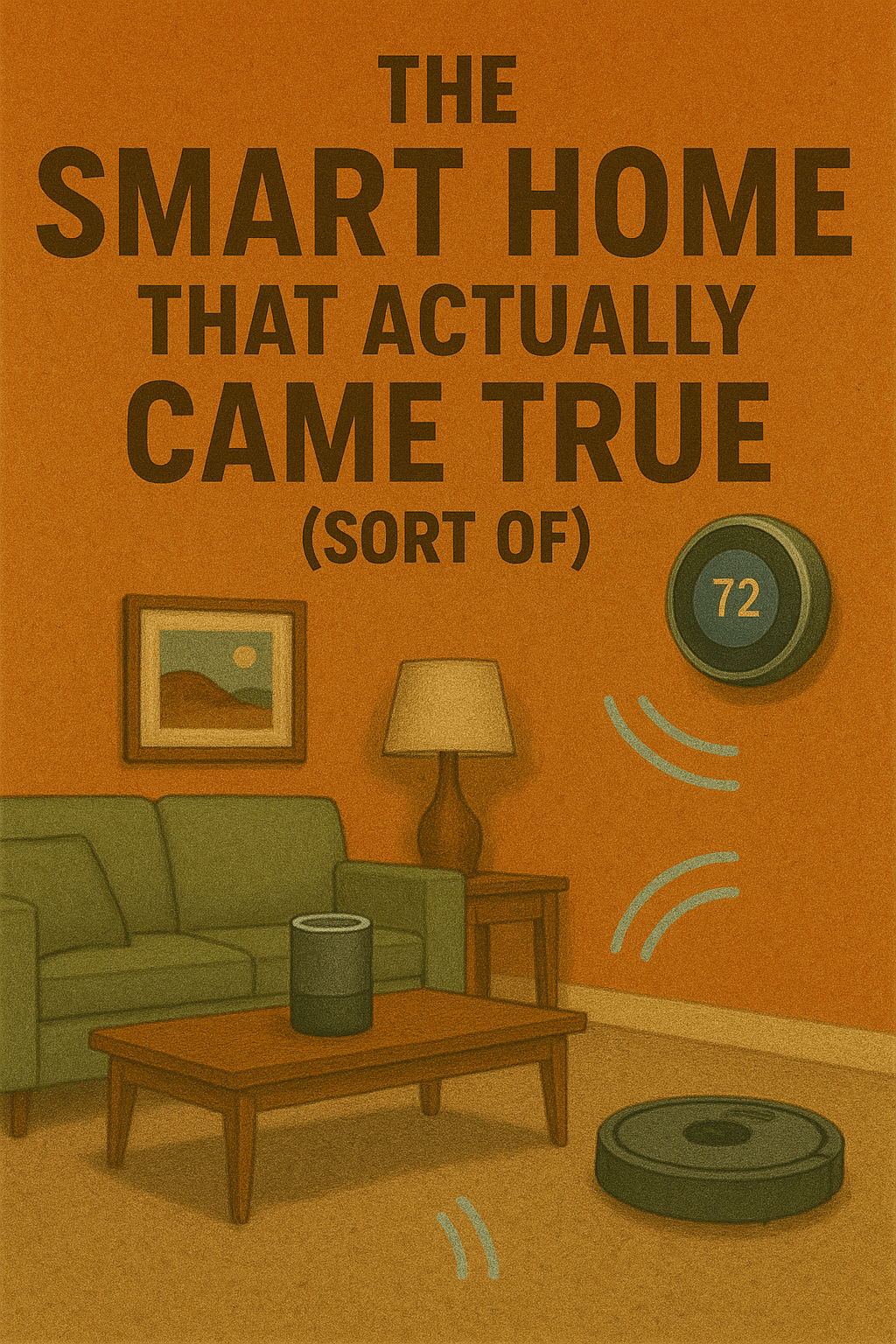
    That innocent-looking speaker on the shelf? It answers questions, orders groceries, and controls the lights. Your thermostat knows when you’re home and when you’re binge-watching. Even your fridge has opinions about the yogurt you’re ignoring. None of it looks futuristic, it just looks ordinary, and that’s the trick.

    The prophets got the function right but the form wrong. Instead of gleaming robots, we got invisible upgrades: doorbells with degrees, phones that became tricorders, watches that call for help. The revolution happened in stealth mode, making the impossible feel like a minor update.

    And here’s the twist: our homes don’t just work for us, they learn from us. The Roomba maps your floor plan, your streaming service predicts your cravings, your wearable keeps tabs on your heartbeat. We didn’t get Rosie the Robot—we got a benevolent, data-obsessed ghost.

    That’s how the future tends to arrive, not as a thunderclap, but as a quiet enhancement of daily life. By the time we notice it, it’s already normal. The real magic of smart homes isn’t how futuristic they look, but how easily they vanish into the background, turning science fiction into yesterday’s news.

    ,
  • The Great Paper Paradox: How the Paperless Office Became the Paper Full Office

    It’s the late 80s and a corporate futurist in an oversized suit clicks through slides on an overhead projector, gleefully declaring to a room of hopeful junior execs: “By the year 2000, our offices will be completely paper free. No filing cabinets, no shredders, no clutter, just the hum of a pc and the clicks of a keyboard.” The audience nods, dazzled by the miracle of personal computers and the promise of databases to store all files.

    Fast-forward to today, and that prophecy looks less like foresight and more like a bad joke.

    Paper may have seen an initial decline, but eventually staged a strong comeback. Printers churned out stacks of documents, sticky notes colonized every cubicle, and meeting tables groaned under the weight of neatly stapled decks. The irony is, computers didn’t kill paper; they made it easier to summon. Suddenly, anyone could produce twenty professional copies of a draft at the touch of a button.

    And yet, the real twist wasn’t just convenience. As our digital world grew more fragile; file corrupting, systems crashing, clouds occasionally leaking; paper became a symbol of permanence. A signed contract carried ceremony, a scribbled note carried intention, a sticky post-it on a monitor carried reality (and most likely a password or 2.) Paper was no longer the future’s enemy; it was its talisman.

    The so-called paperless office never arrived because, truthfully, we never wanted it to. What we built instead was a hybrid: digital for speed, paper for significance. Email replaced memos, but agreements still deserve ink. Cloud servers hold terabytes, but the critical page still gets printed “just in case.”

    The prophets asked the wrong question. It wasn’t when paper would vanish, it was, what role would it play once it didn’t have to be everywhere? And the answer is charmingly human: paper became exactly what we wanted it to be, something solid, permanent, and reassuringly real in a world of vanishing pixels.

    ,
  • Why Our Jetpack Dreams Crashed and Burned

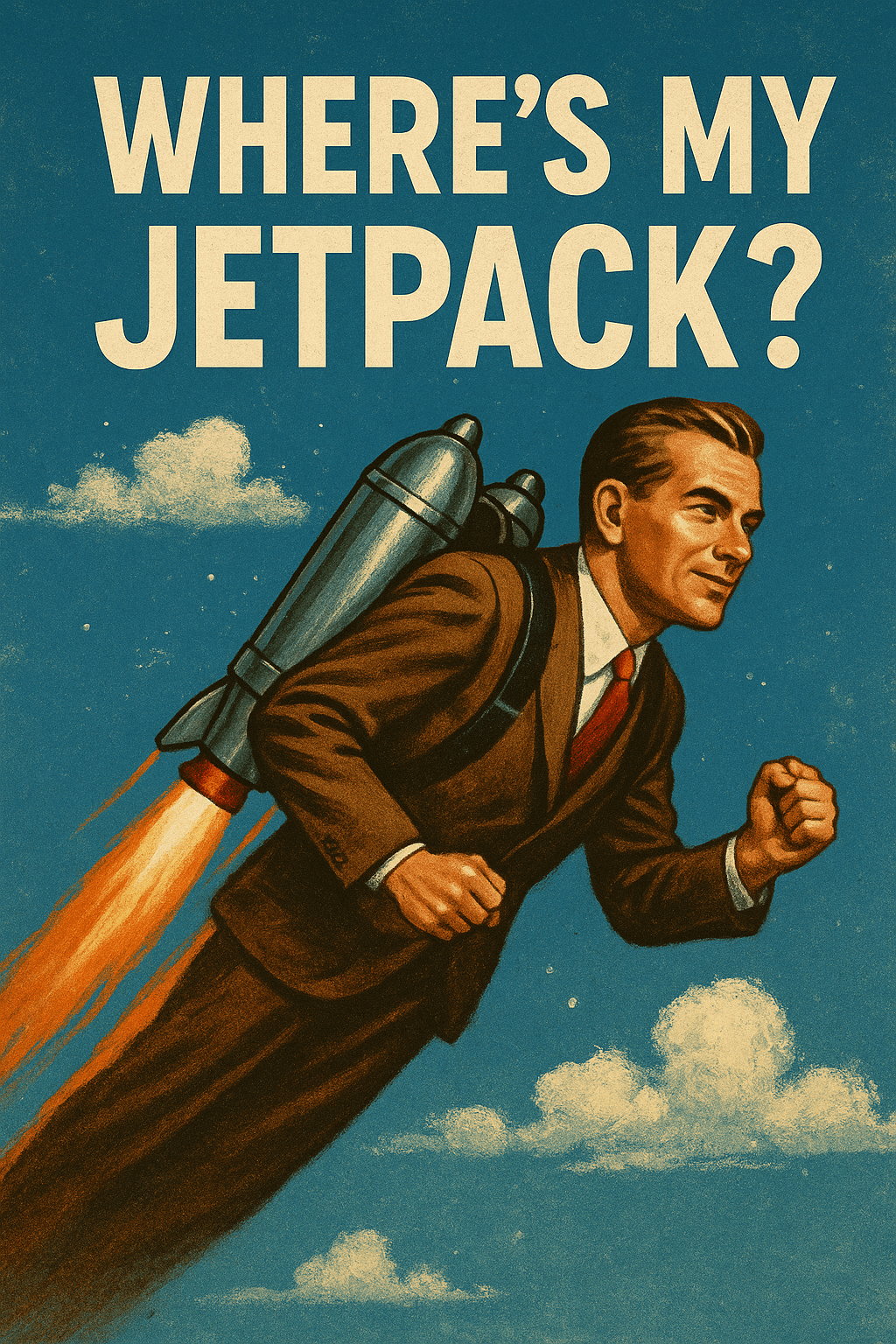
    Life magazine showed the world a man with a rocket attached to his back, soaring over a crowd of gasping onlookers. In 1965, James Bond blasted across screens in Thunderball, and sci-fi writers treated rocket packs as inevitable. The jetpack wasn’t just a gadget, it was a promise that we’d graduate from ground-bound mortals to sky-surfing demigods of efficiency. But physics isn’t concerned with our dreams.

    The futurists promised we’d escape traffic jams by strapping rockets to our backs. Instead, we built networks and machines that made traffic itself smarter.

    Driverless cars aren’t flashy and loud, but they see farther, react faster, and never get bored. Electric scooters and bikes expanded city mobility without a puff of exhaust. And aerial taxis are turning “flying car” sketches into pilot projects in Dubai, Los Angeles, and beyond.

    None of it looks like pulp sci-fi. There are no silver jumpsuits or Bond-style jetpack stunts. Instead, the impossible slipped in sideways: practical, efficient, and, crucially, safe enough to actually use.

    The jetpack fantasy shows how often we mistake a spectacle for progress. We picture rocket packs and sky-high freeways, when the real breakthroughs look ordinary, cars that drive themselves, taxis that lift off like drones, all manner of vehicles summoned with an app. The future rarely arrives with a roar of engines. More frequently, it hums quietly in the background, solving problems while we barely notice.

    So maybe we didn’t become rocket men and women. But in a strange twist, we still built the skyways, only they don’t run through science fiction skies, they run through the ordinary streets and skies of our daily lives.

    ,
  • Canva intends to acquire MagicBrief

    Canva is snapping up MagicBrief, a rising creative startup known for streamlining the ad campaign process. This acquisition is more than just a feature grab; it’s a strategic move that positions Canva even deeper into the creative and marketing stack. MagicBrief’s tools, which allow teams to quickly gather visual inspiration, organize campaign ideas, and collaborate in real time, fit perfectly with Canva’s mission to make design accessible and agile. With this addition, Canva is evolving from a design tool into a full-fledged creative operating system—one that now caters not just to individuals and small teams, but increasingly to agencies and brands running large-scale campaigns.

    https://www.canva.com/newsroom/news/magicbrief-acquisition/

  • Another Ode to Sloppiness (as suggested by a chatgpt)

    Oh, fair disorder, muse of inspired minds,

    Thy blessed chaos dost our thoughts unbind.

    Within thy tangled web of wild designs,

    We find the spark that reason oft declines.

    Hail, haphazard strokes upon the page,

    Where careless brush doth craft its errant age.

    In thee, sweet mess, is genius’ stage,

    Thou art the breath that frees us from the cage.

    For in thy cluttered realm, ideas do breed,

    From careless chance, great visions oft proceed.

    Where polished order may withhold its seed,

    Thy fertile ground gives rise to what we need.

    Embrace the errant line, the fleeting thought,

    For in thy tangled skein, true art is wrought.

    Oh, let not order be too dearly bought,

    For in thy chaos, beauty’s battle’s fought.

    Thus, let us sing of thee, delightful mess,

    Wherein the soul finds its own true express.

    In sloppiness, we find our bold success,

    And through thy charm, our hearts’ desires confess.