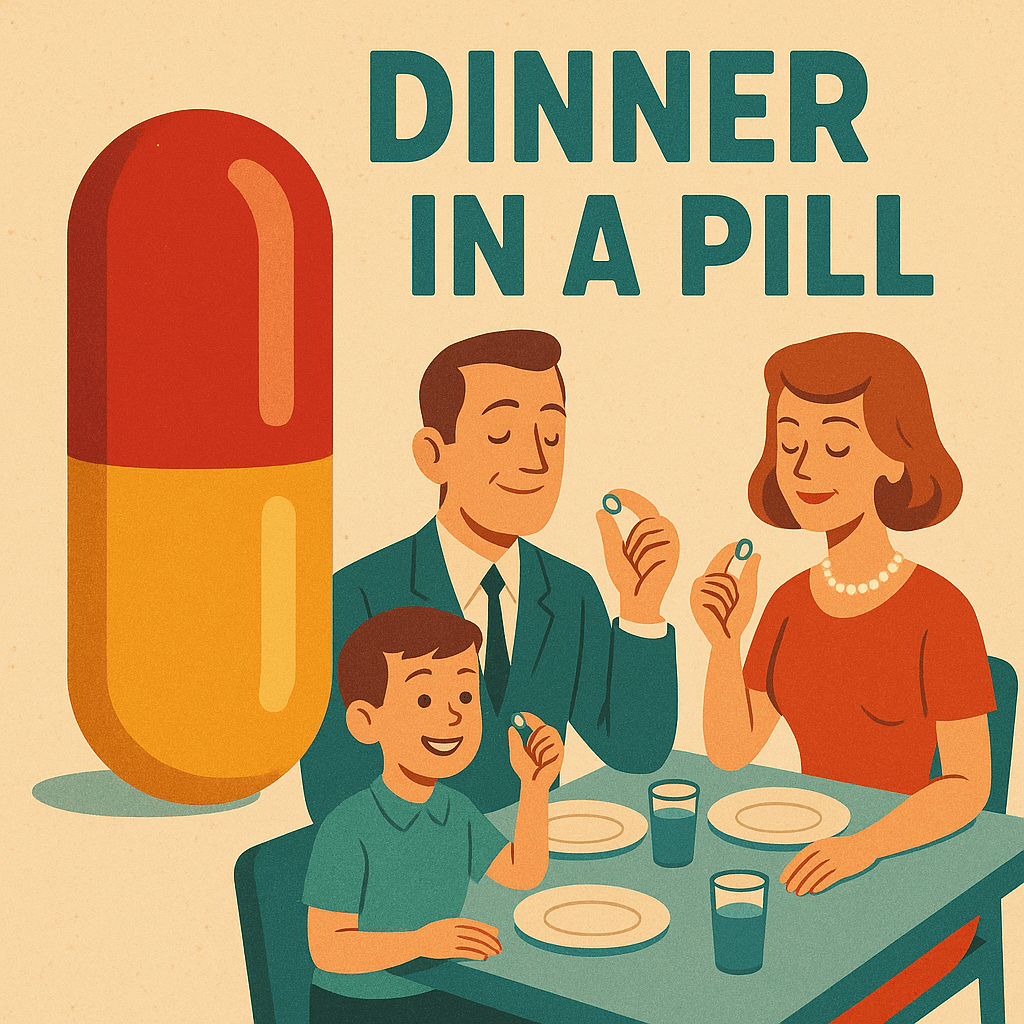
For decades, scientists and magazine writers treated the “dinner pill” as an inevitability. The idea had been around since at least 1893, when suffragist Mary Elizabeth Lease predicted at the Chicago World’s Fair that kitchens would vanish, replaced by little phials containing concentrated wheat extract. By 1913, L. Frank Baum had given Oz readers “Square Meal Tablets,” and by mid-century, magazines promised a future where grocery shopping and cooking were obsolete.
The logic seemed flawless: food is just fuel, so why not optimize it? Scientists cooked up powders, pills, and formulas that could, in theory, replace entire meals. Corporations poured money into “engineered nutrition.” Goodbye recipes, goodbye dishes; just perfect fuel for perfect people. And yet, when the capsules arrived, no one wanted them.
Food is memory and story. Your grandmother’s soup matters not for its nutritional profile, but because it carries her love and her history. A birthday cake is more than flour and sugar, it’s a celebration you can taste. Even a terrible gas station sandwich becomes part of your road trip story.
Meals are comfort and ritual. They are the smell of garlic in a pan, the crunch of fresh vegetables, the steam of soup on a cold night. They are the imperfect dinners that still feel like home, the bread broken with friends, the conversations that happen between bites. Efficiency experts understood nutrition but missed the poetry of the table.
So here we are in 2025. Yes, we drink shakes in traffic and chew protein bars on trails. But we still gather around tables, pass recipes down, and celebrate with meals that matter.
The dinner pill failed because it solved the wrong problem. We didn’t want perfectly efficient nutrition, we wanted nourishment in every sense: physical, emotional, cultural, spiritual.
 Rant and File
Leave a comment