Back in the 1950s, the house of tomorrow was a spectacle. Popular Mechanics sketched conveyor-belt kitchens, chrome countertops, and robot maids clattering across linoleum. The future was supposed to look like a spaceship had landed in suburbia.
But when the smart home finally arrived, it didn’t come dressed in blinking lights and mechanical arms. It slipped in quietly, disguised as everyday objects.
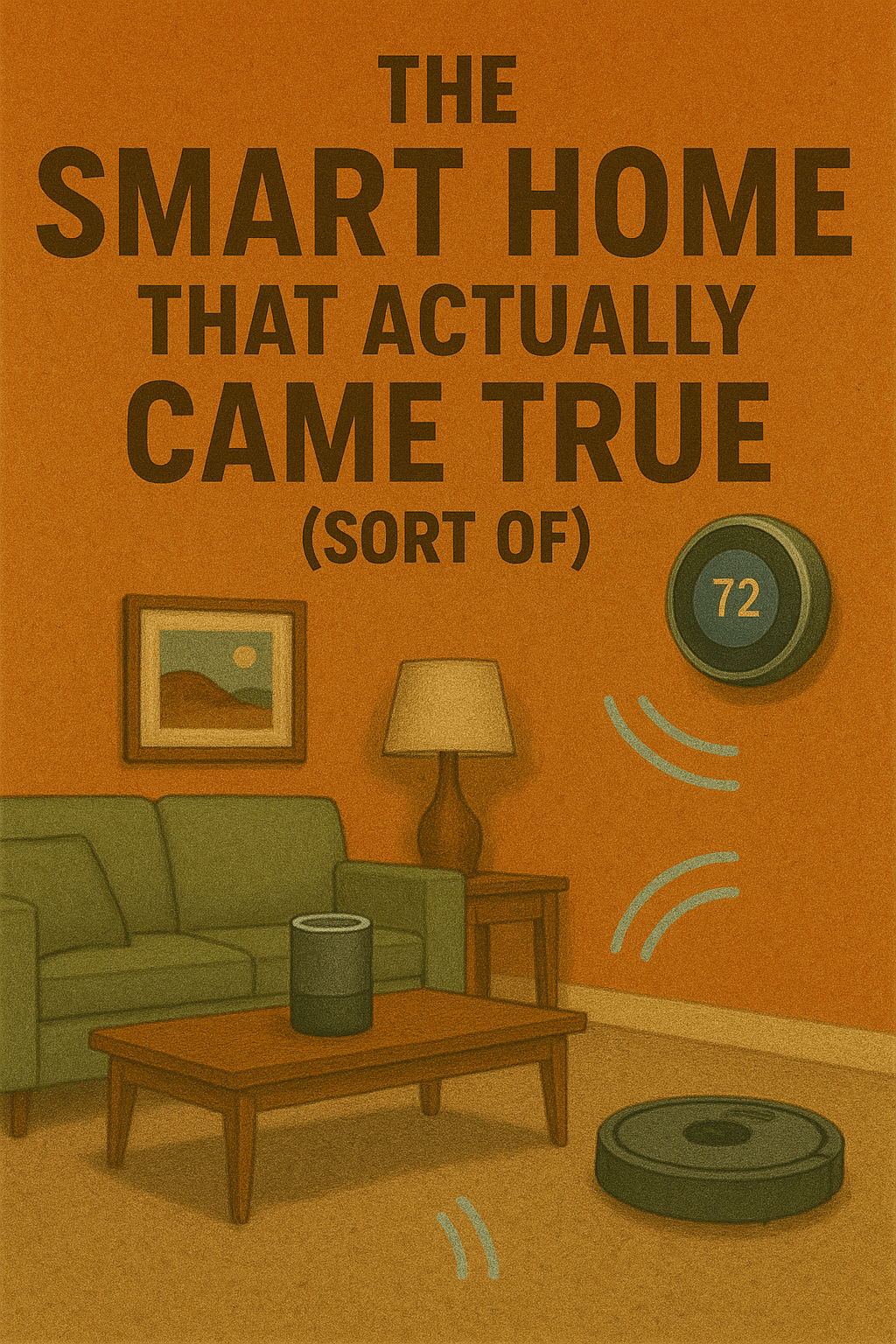
That innocent-looking speaker on the shelf? It answers questions, orders groceries, and controls the lights. Your thermostat knows when you’re home and when you’re binge-watching. Even your fridge has opinions about the yogurt you’re ignoring. None of it looks futuristic, it just looks ordinary, and that’s the trick.
The prophets got the function right but the form wrong. Instead of gleaming robots, we got invisible upgrades: doorbells with degrees, phones that became tricorders, watches that call for help. The revolution happened in stealth mode, making the impossible feel like a minor update.
And here’s the twist: our homes don’t just work for us, they learn from us. The Roomba maps your floor plan, your streaming service predicts your cravings, your wearable keeps tabs on your heartbeat. We didn’t get Rosie the Robot—we got a benevolent, data-obsessed ghost.
That’s how the future tends to arrive, not as a thunderclap, but as a quiet enhancement of daily life. By the time we notice it, it’s already normal. The real magic of smart homes isn’t how futuristic they look, but how easily they vanish into the background, turning science fiction into yesterday’s news.
 Rant and File
Leave a comment