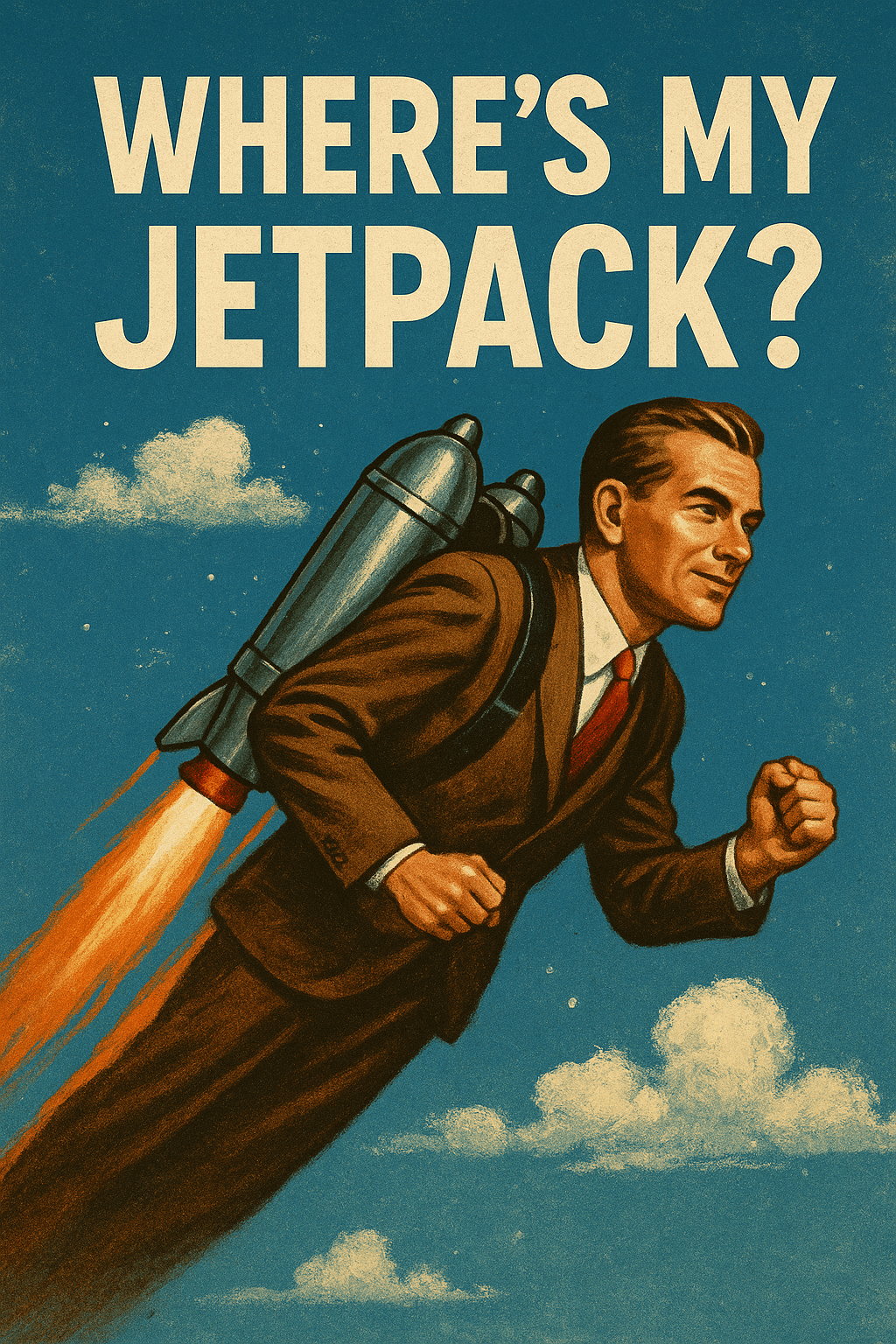
Life magazine showed the world a man with a rocket attached to his back, soaring over a crowd of gasping onlookers. In 1965, James Bond blasted across screens in Thunderball, and sci-fi writers treated rocket packs as inevitable. The jetpack wasn’t just a gadget, it was a promise that we’d graduate from ground-bound mortals to sky-surfing demigods of efficiency. But physics isn’t concerned with our dreams.
The futurists promised we’d escape traffic jams by strapping rockets to our backs. Instead, we built networks and machines that made traffic itself smarter.
Driverless cars aren’t flashy and loud, but they see farther, react faster, and never get bored. Electric scooters and bikes expanded city mobility without a puff of exhaust. And aerial taxis are turning “flying car” sketches into pilot projects in Dubai, Los Angeles, and beyond.
None of it looks like pulp sci-fi. There are no silver jumpsuits or Bond-style jetpack stunts. Instead, the impossible slipped in sideways: practical, efficient, and, crucially, safe enough to actually use.
The jetpack fantasy shows how often we mistake a spectacle for progress. We picture rocket packs and sky-high freeways, when the real breakthroughs look ordinary, cars that drive themselves, taxis that lift off like drones, all manner of vehicles summoned with an app. The future rarely arrives with a roar of engines. More frequently, it hums quietly in the background, solving problems while we barely notice.
So maybe we didn’t become rocket men and women. But in a strange twist, we still built the skyways, only they don’t run through science fiction skies, they run through the ordinary streets and skies of our daily lives.
 Rant and File
Leave a comment